Low-Order Deflagration: The Proven Method for Safer UXO Disposal
Author: Jon Hall
Published: 17th December 2024
Unexploded ordnance (UXO) and Explosive Remnants of War (ERW) disposal has long been a critical challenge for military and commercial operations worldwide. Traditionally, high-order detonations were the go-to method for clearing UXOs, but they come with significant risks to the environment and nearby infrastructure. Low-order deflagration, developed by Alford Technologies in the early 2000s, is now the internationally adopted alternative to high-order disposal. This technique has reshaped UXO disposal practices globally, notably in offshore wind farm UXO clearance. Today, the technique is mandated as the preferred disposal method under the UK Government Joint Position Statement on UXO Clearance (revised 2024).
What is Low Order Deflagration?
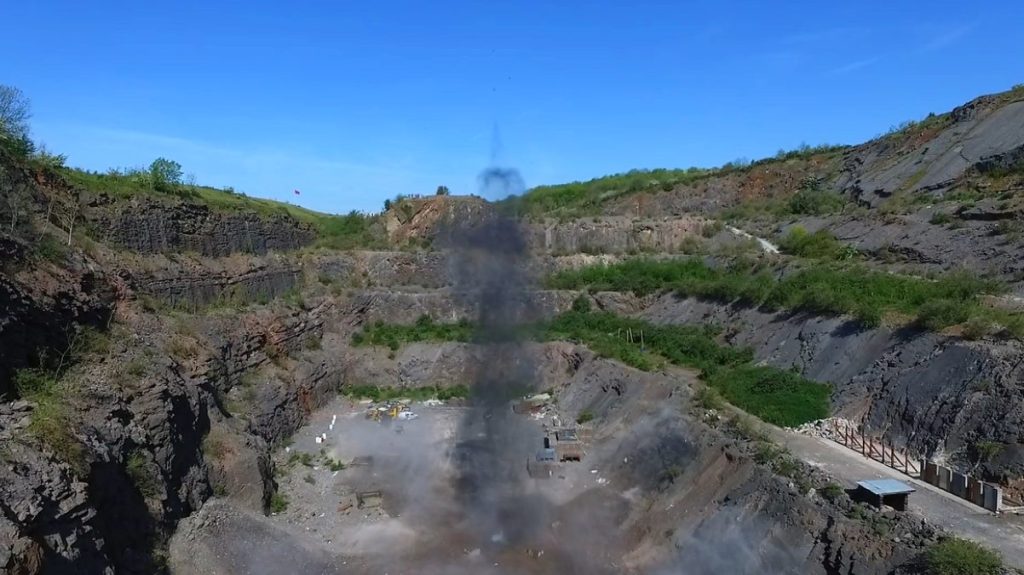
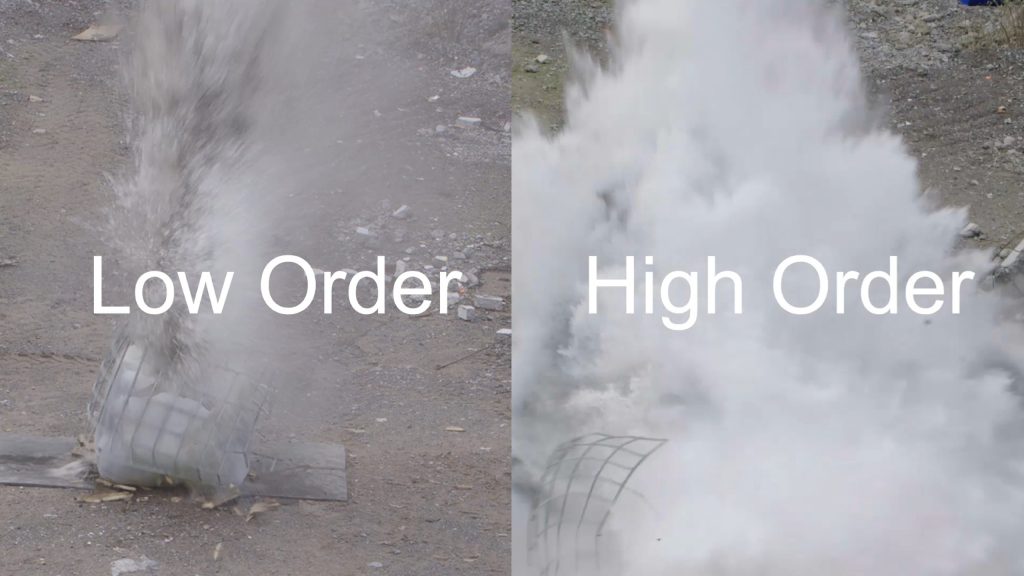
Low-order deflagration is a controlled EOD technique in which a shaped charge penetrates the casing of an unexploded ordnance (UXO) item with insufficient shock energy to trigger detonation. The explosive contents instead react through rapid burning – deflagration – rather than a high-order detonation chain reaction.
Pioneered by Alford Technologies in the early 2000s, the method produces significantly lower shockwave, acoustic output, and seabed disturbance than traditional high-order disposal. Peak Sound Pressure Levels (SPLpeak) and Sound Exposure Levels (SEL) are up to 20 dB lower, making it the preferred method in environmentally sensitive and protected marine areas.
Key Benefits of Low Order Deflagration
- Reduced Risk of Unintended Detonation: The controlled burn significantly reduces the risk of unintended explosions.
- Reduced Environmental Impact: It lowers acoustic and physical impacts on sensitive ecosystems.
- Operational Efficiency and Cost Reduction: The technique is more efficient and allows simultaneous disposals, reducing time and resources.
Alford Technologies’ Pluton and Vulcan shaped charges, fitted with jet-forming cones, are the tools used to initiate low-order deflagration in both land and maritime EOD operations.
How Low-Order Deflagration Works
Step 1: Casing Penetration
The operator positions a shaped charge against the outer casing of the UXO at a calculated stand-off distance. When initiated, the charge fires a magnesium or copper JFC, a high-velocity penetrator designed to pierce through steel without transmitting enough shock energy to cause detonation.
The penetration provides a controlled entry point into the UXO while ensuring that the internal explosive material remains intact and undetonated.
Operators select the projectile type, explosive load, and stand-off distance based on the casing thickness, UXO type, and operational environment.
Step 2: Deflagration Initiation
When the jet breaches the casing, it ignites the explosive material inside. However, the energy released is insufficient to trigger a detonation, which would create a high-pressure shock wave that could lead to a full explosion. Instead, the explosive material starts to deflagrate, meaning it burns quickly from the point of ignition outward without initiating a chain reaction that would cause an explosion.
This distinction is crucial. Detonation propagates as a supersonic shock wave through the explosive. In contrast, deflagration involves subsonic combustion; it is energetic but significantly less violent. This results in a controlled release of energy rather than a destructive explosion.
Step 3: Controlled Burn-Out
The explosive contents burn through to completion. Without a detonation chain, there is no large-scale blast wave, no seabed cratering, and no wide debris scatter. SPLpeak and SEL – the acoustic measures used by regulators to assess risk to marine mammals – are governed by the size of the disposal tool charge, not the NEQ of the UXO itself.
This predictability is a defining operational advantage. Operators and environmental consultants can model acoustic output accurately before the disposal event, simplifying Marine Mammal Mitigation Protocol (MMMP) planning and MMO marine licence applications. Debris typically remains within a few metres of the target, enabling straightforward post-disposal survey and recovery.
High-Order vs Low-Order: Key Differences
| Parameter | High-Order Detonation | Low-Order Deflagration |
|---|---|---|
| Mechanism | Donor charge triggers full detonation of UXO explosive contents | Shaped charge penetrates casing; explosive contents burn rather than detonate |
| Acoustic Output | Very high – SPLpeak and SEL require extensive mitigation zones | Up to 20 dB lower than high-order; governed by disposal tool NEQ, not UXO size |
| Seabed Impact | Significant cratering and seabed destruction in blast radius | No seabed crater; minimal vibration and physical disturbance |
| Debris Scatter | Wide radius; requires extensive post-disposal survey | Localised within metres of target; simpler cleanup and survey |
| Marine Mammal Risk | High – noise levels can cause permanent injury at distance | Significantly reduced; more predictable mitigation exclusion zones |
| Simultaneous Disposal | Not typically possible due to blast radius | Multiple UXOs can be addressed simultaneously |
| Acoustic Modelling | Complex – varies with UXO explosive content (NEQ) | Predictable – noise governed by disposal tool charge size only |
| UK Regulatory Status (2024) | Last resort – extraordinary circumstances only under Defra JPS | Default method mandated by Defra Joint Position Statement (revised 2024) |
| Tools | High-order donor charges | Alford Shaped Charges |
Why Low-Order Deflagration is Crucial for Maritime UXO Disposal

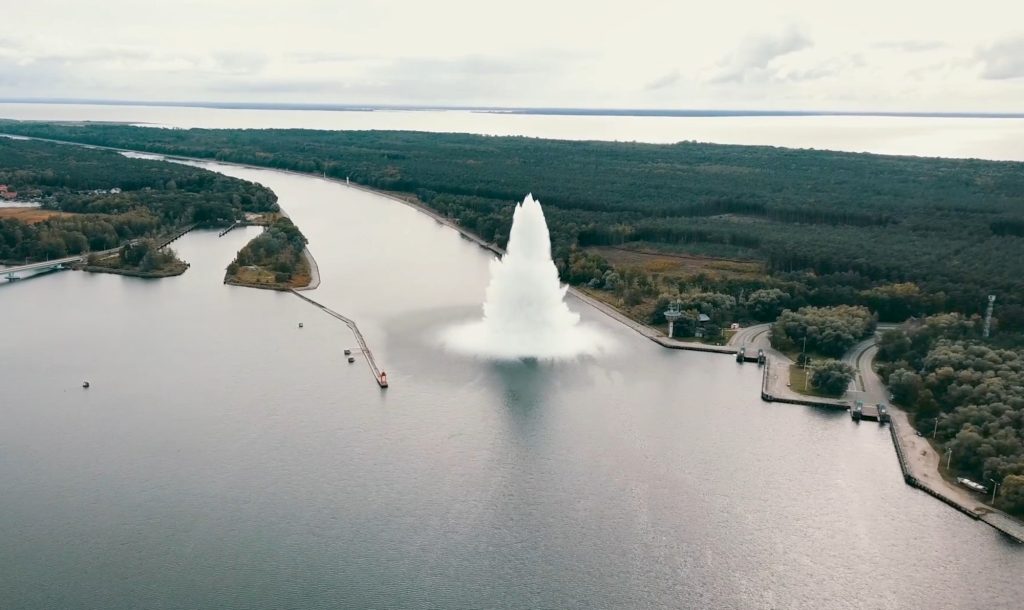
The significance of low-order deflagration becomes particularly evident in offshore wind farm UXO clearance. This is an increasingly vital area of focus as offshore developments such as wind farms and energy infrastructure expand. Traditional high-order underwater UXO disposal techniques damage the seabed and create noise pollution that can harm marine mammals and other sea life.
Recent UK Government-Backed Trials Highlight the Benefits
Recent UK government-backed trials compared the performance of high-order detonations with low-order deflagration, using Alford Technologies’ 250 g Pluton shaped charge to penetrate the UXO casing and initiate deflagration. The findings, published in the Marine Pollution Bulletin, underscore the advantages of this innovative approach:
- Significant Noise Reduction: SPLpeak and SEL are up to 20 dB lower during low-order events than during high-order detonations, making them far less disruptive to marine ecosystems.
- Reduced Seabed Damage: Unlike high-order detonations, which can cause extensive cratering and seabed destruction, low-order deflagration produces minimal vibration and physical disturbance.
- Localised Debris: Debris from deflagration events typically remains within a few metres of the target, ensuring easier cleanup and less environmental contamination.
Low-Order Deflagration and UK Environmental Regulation
Defra published a revised Joint Position Statement on UXO Clearance in 2024, setting stricter expectations on high-order detonations.
From January 2025, regulators mandate low-noise disposal methods as the default for all offshore UXO clearance in UK waters. They permit high-order detonation only in extraordinary circumstances, maintaining an ‘As Low as Reasonably Practicable’ (ALARP) approach.
Low-order deflagration meets the requirement. It produces predictable, measurable acoustic output governed by the disposal tool NEQ rather than the UXO explosive content, making acoustic modelling, impact assessment, and Marine Management Organisation (MMO) marine licence applications significantly more straightforward.
Environmental and Operational Advantages
The environmental and operational advantages of low-order maritime UXO disposal go beyond noise and seabed protection. This method is also ideal for sensitive marine environments and busy offshore zones, where minimising disruption is critical.
Additional Benefits
- Simultaneous Disposals: Low-order deflagration enables operators to address multiple UXOs simultaneously -unlike high-order techniques – improving efficiency.
- Lower Costs: The precision and control of low-order deflagration translate to reduced operational expenses over time.
- Compliance with Environmental Regulations: As global environmental standards tighten, low-order deflagration provides a compliant, sustainable solution for UXO disposal.
Low-Order Deflagration: A Global Standard
Since its inception, military forces, commercial offshore operators, and environmental organisations worldwide have adopted a low-order approach to UXO clearance. The UK Government’s revised Joint Position Statement on UXO Clearance (2024) now mandates low-noise disposal methods as the default procedure in UK waters. This regulatory stance reflects the technique’s proven effectiveness, and an increasing number of international licensing authorities are following the UK’s lead.
Demand will only grow. Offshore wind developers continue to expand projects across the North Sea, the Irish Sea, and beyond, bringing an increasing volume of legacy UXO that they must clear.
As environmental protection standards tighten globally and regulators shift from high-order detonation to low-order deflagration, which offers predictable acoustic output, minimal seabed impact, and an established operational history, it is the method the industry is increasingly adopting.
Partnering with Alford Technologies
Alford Technologies has been at the cutting edge of EOD low-order disposal tools for decades. Our pioneering work with low-order deflagration continues to shape the future of UXO disposal.
Explore the Alford UXO disposal range, including:
- Pluton
- Vulcan
- Magma
- PLMEOD Kit
Trusted by EOD teams worldwide for low-order operations, our tools are deployable manually or by ROV, giving operators maximum operational flexibility.
We are helping military and commercial entities worldwide adopt lower-impact, regulatory-compliant EOD practices. Speak to our EOD specialists for a technical consultation.
Frequently Asked Questions
What is low-order deflagration?
Low-order deflagration is a controlled EOD technique in which a shaped charge penetrates the casing of an unexploded ordnance (UXO) item with insufficient shock energy to trigger detonation. The explosive contents instead react through rapid burning – deflagration – rather than a high-order detonation chain reaction.
Pioneered by Alford Technologies in the early 2000s, the method produces significantly lower shockwave, acoustic output, and seabed disturbance than traditional high-order disposal. Peak Sound Pressure Levels (SPLpeak) and Sound Exposure Levels (SEL) are up to 20 dB lower, making it the preferred method in environmentally sensitive and protected marine areas.
How does low-order deflagration differ from high-order detonation?
Deflagration burns the explosive contents without triggering a detonation chain. It produces up to 20 dB less acoustic output, no seabed cratering, and localised debris. High-order detonation uses a donor charge to trigger a full explosion, causing significant noise, seabed damage, and wide debris scatter.
What shaped charge is used for low-order deflagration?
Alford Technologies Vulcan and Pluton shaped charges, fitted with either magnesium or copper Jet Forming Cones, are the industry standard tools for initiating low-order deflagration. Both tools are highly effective in land and maritime environments.
Is low-order deflagration compliant with UK environmental regulations?
Yes. The UK Government Defra Joint Position Statement on UXO Clearance (revised 2024) mandates low-noise disposal methods as the default for all marine UXO clearance in UK waters. High-order detonation is now only permitted in extraordinary circumstances.
Can low-order deflagration be used for offshore wind farm UXO clearance?
Yex. It is now the standard method for disposing of maritime UXO on offshore wind developments. Teams deployed it at scale during the Moray West offshore wind farm clearance, successfully neutralising 82 UXO items ranging from 6 to 700 kg NEQ.
What are the environmental benefits of low-order deflagration over high-order detonation?
Low-order deflagration produces up to 20 dB less underwater noise, eliminates seabed cratering, reduces risk of injury to marine mammals, limits debris scatter to within a few metres of the target, and enables predictable acoustic modelling for licensing and impact assessments.
Who developed low-order deflagration for UXO disposal?
Alford Technologies, a UK-based explosive technology company, developed and pioneered low-order deflagration for UXO disposal in the early 2000s. Government-backed trials published in the Marine Pollution Bulletin have used Alford’s shaped charges.
Page last reviewed April 2026