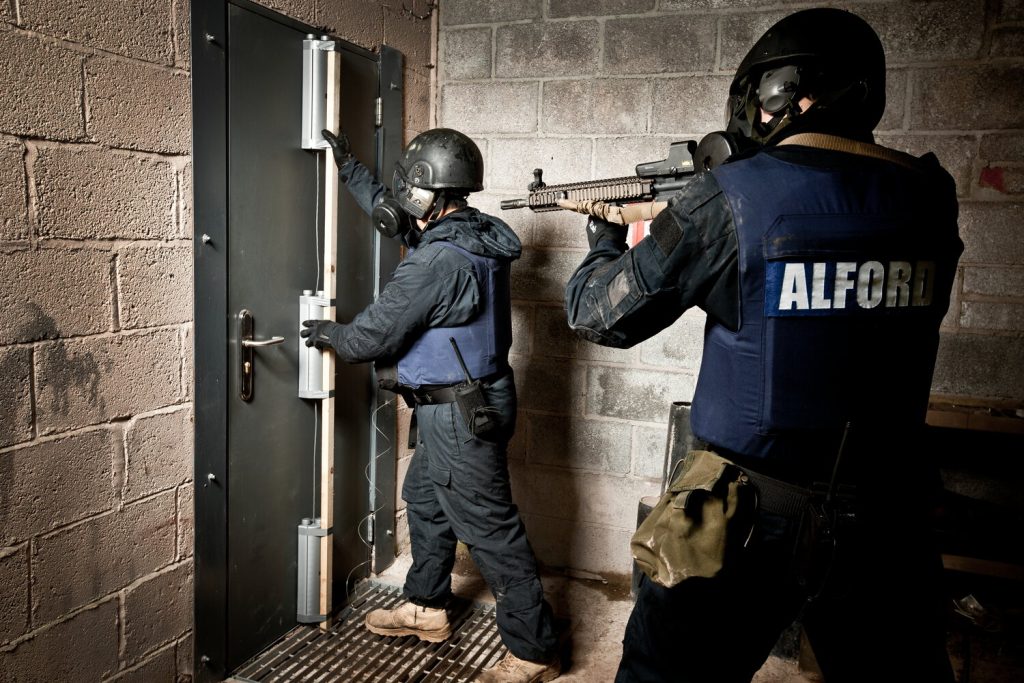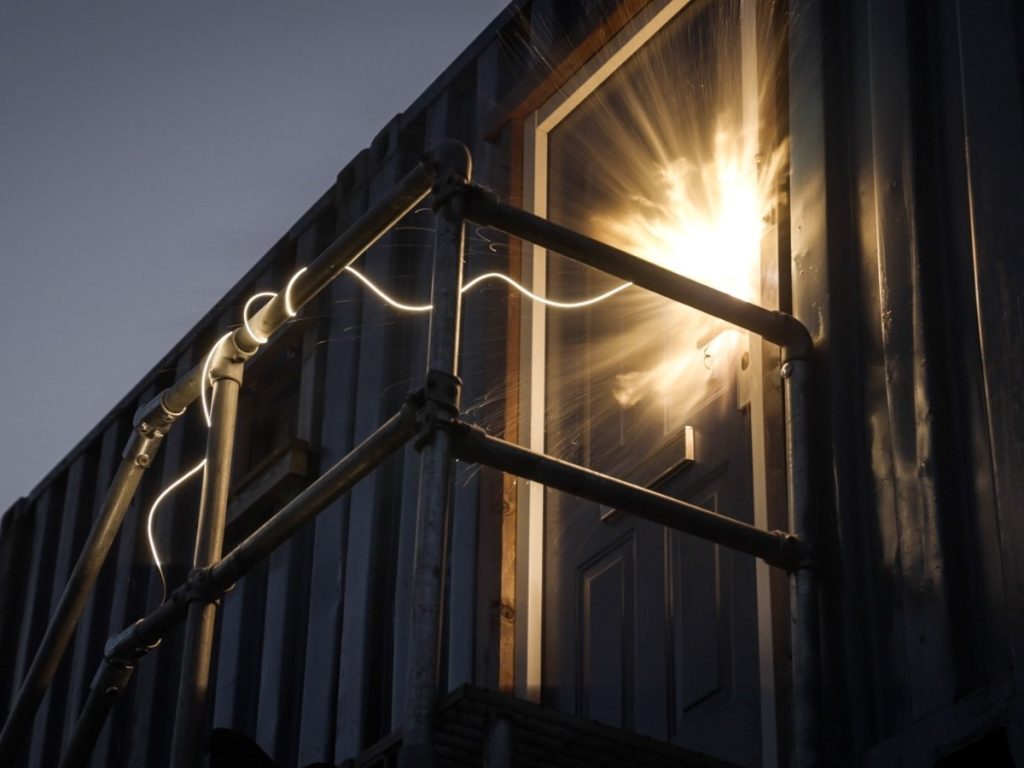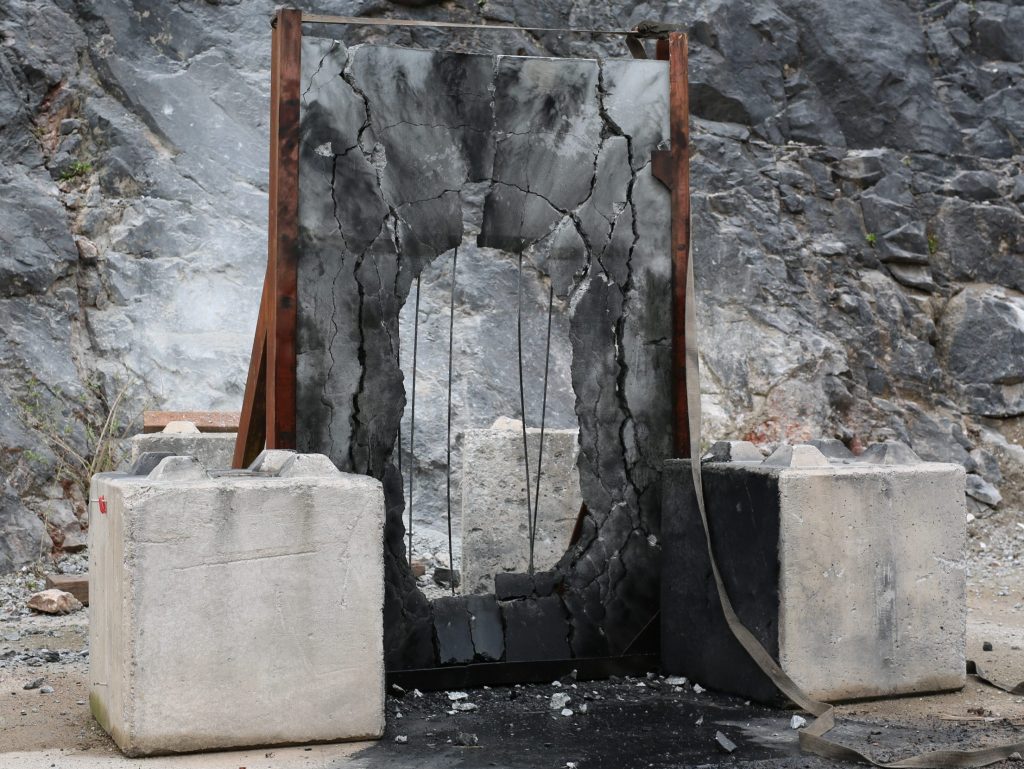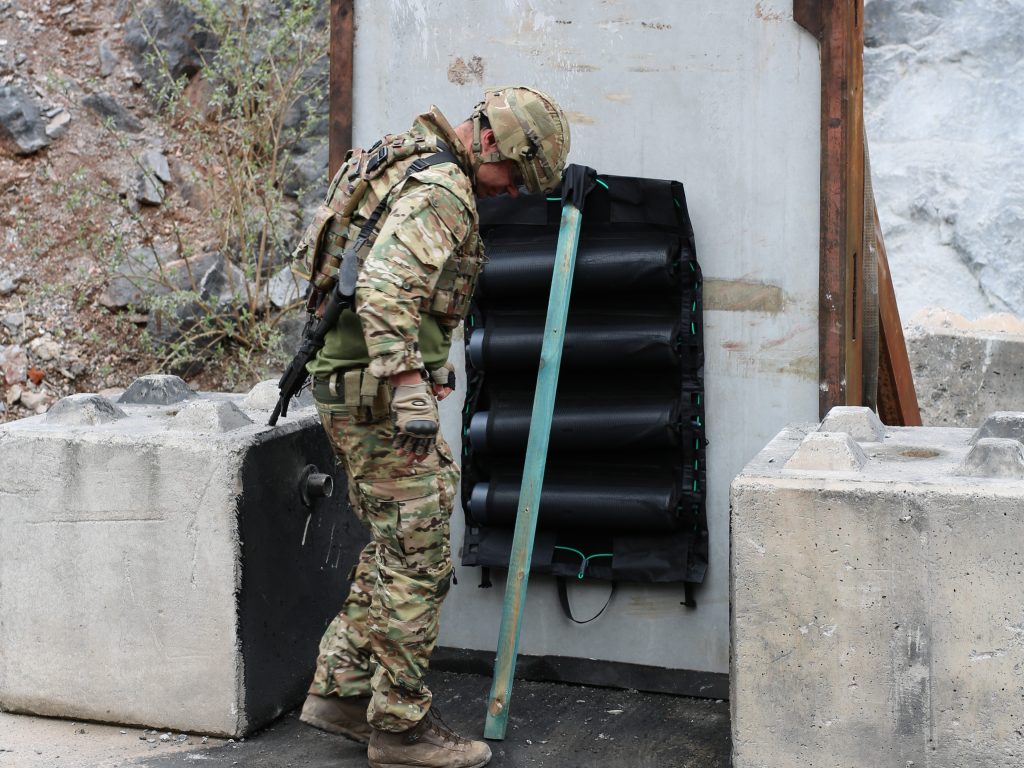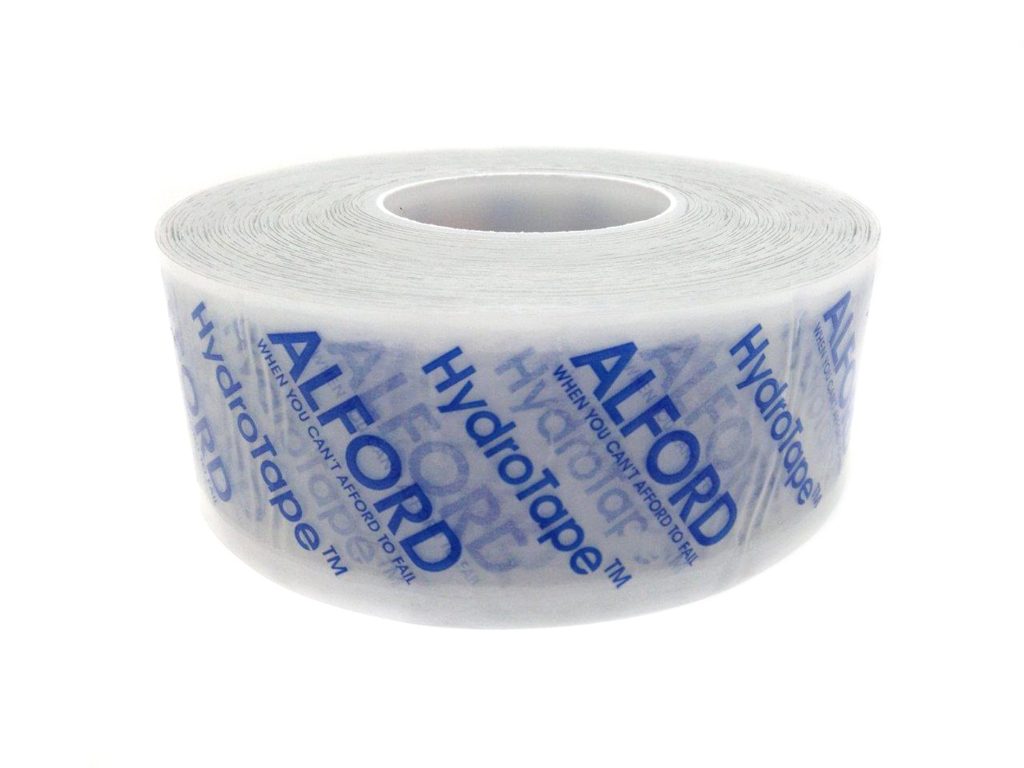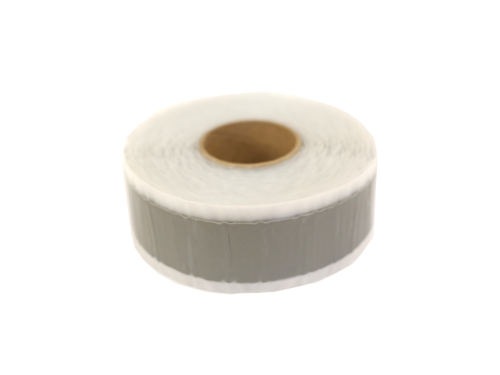
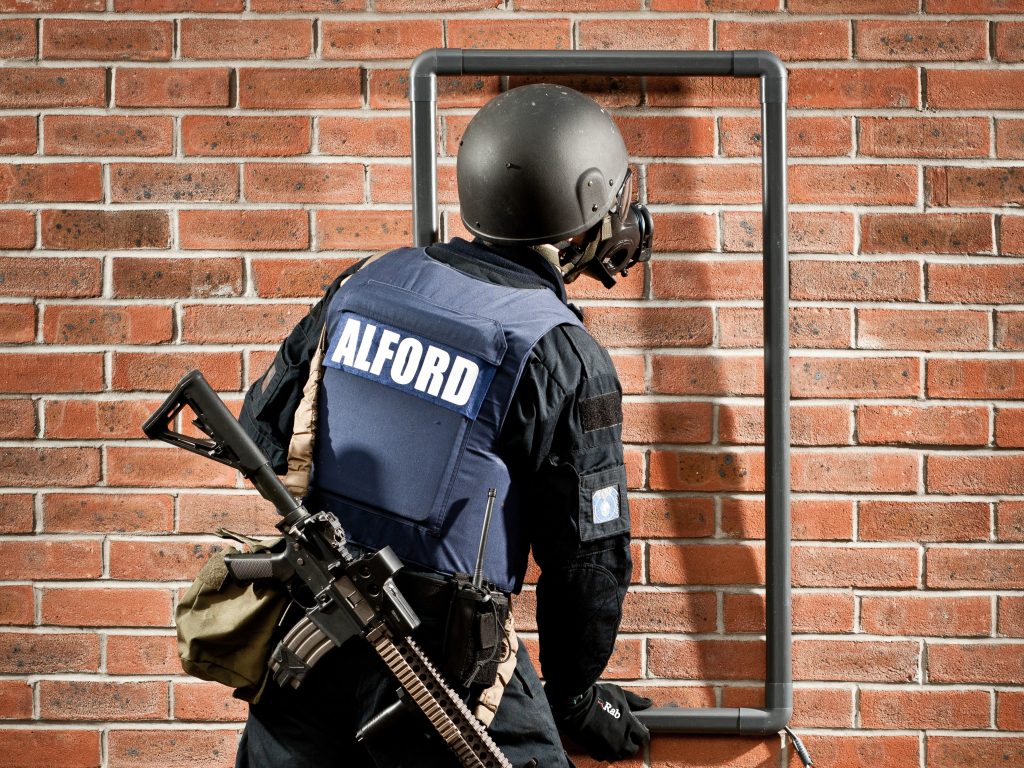
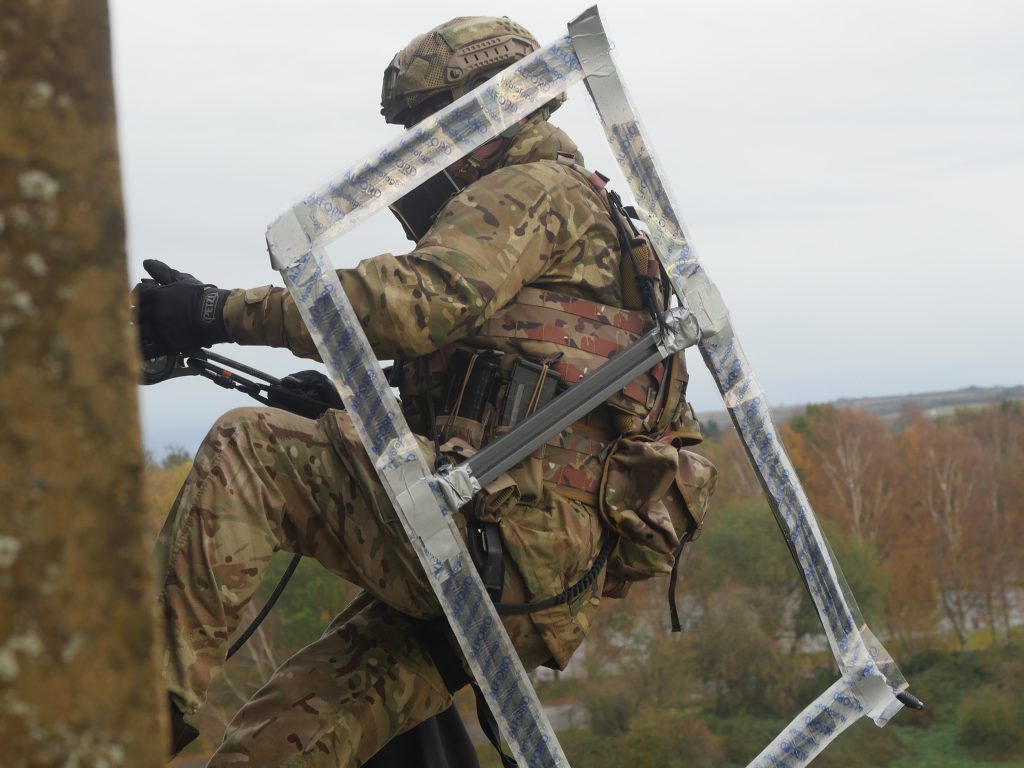
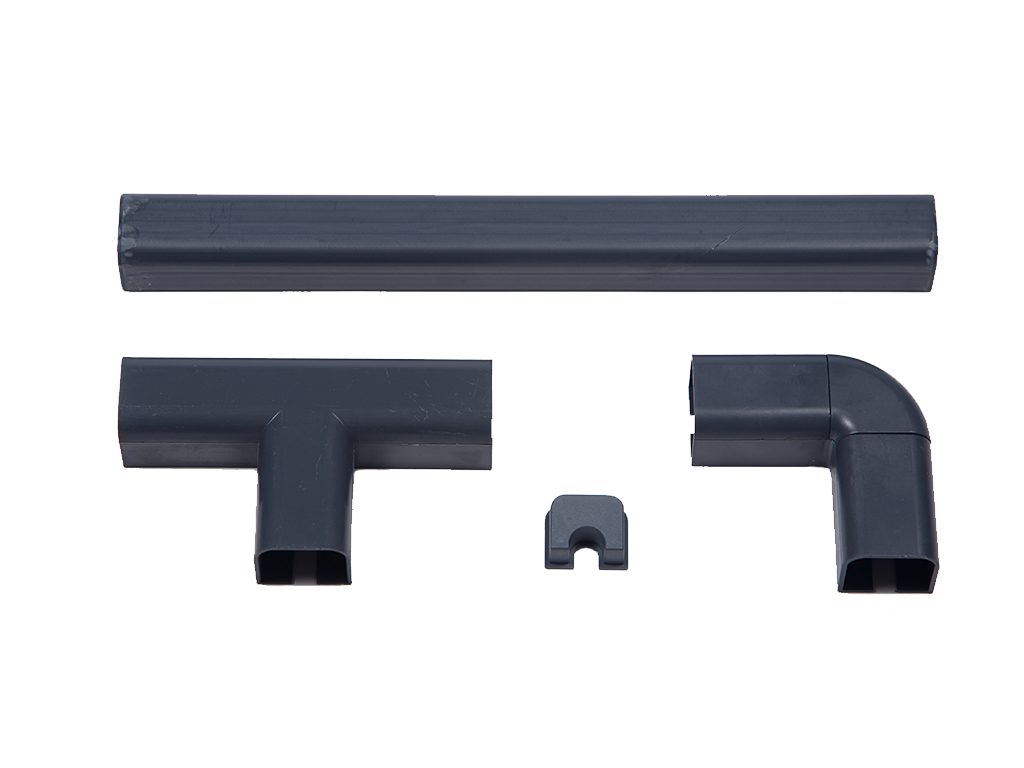
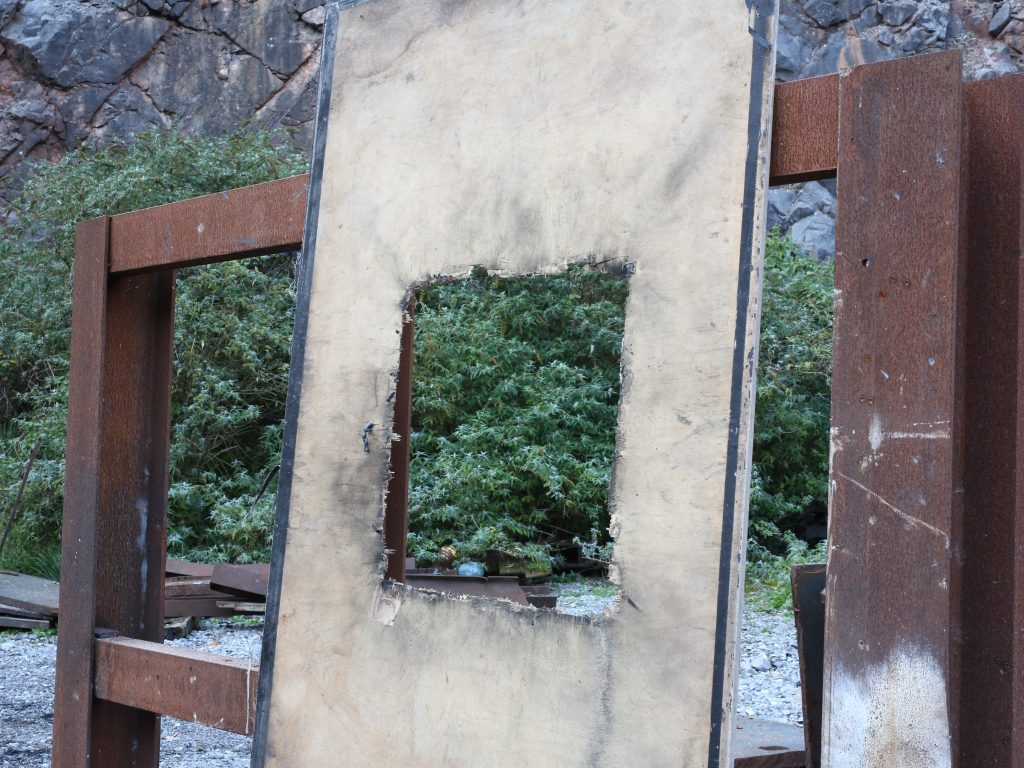
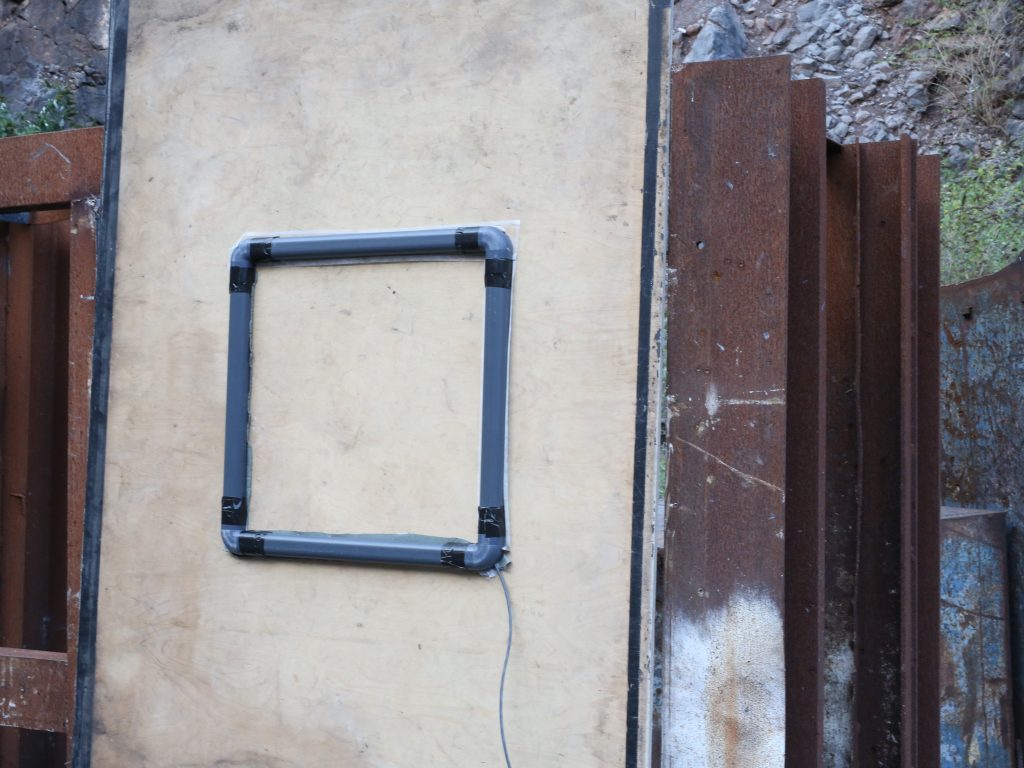
Alford Strip™ is a tamped strip charge for splitting wooden doors and windows, cutting laminated glass, and breaching uPVC doors, using only ¼ to ⅓ of the NEQ required by untamped charges of comparable effect. Cut to length with a hacksaw, connect with supplied corners and T-joints to build frame charges, and fill with detonating cord or plastic explosive; it configures to the target rather than the other way around. Attach with Breacher's Tape™ for clean-to-moderate surfaces or HydroTape™ for damp, dirty, or reposition-required attachments. A prop stick is the alternative where taping isn't practical. Covered in our Explosive Breaching & MoE training.
¼ to ⅓ the NEQ of an untamped charge for the same effect: a smaller explosive load, a lighter carry, and lower blast overpressure for the breacher
Two sizes, two fill types. 25mm (5-20g/m NEQ) or 42mm (20-60g/m NEQ), in water-based gel or clay by operator preference; the 42mm version also accepts plastic explosive
Field-configurable into frame charges using corners and T-joints, for rapid construction of door and window frames on the approach
No metal components. Water or clay fill surrounds the explosive on all sides, suppressing flash, reducing fragmentation to near-zero, and cutting fire risk
Variable NEQ by cord weight, from 5g/m to 60g/m depending on size; other cord weights extend the range in either direction
Operationally proven with military and law enforcement entry teams worldwide
Explosive Load and Performance
The Alford Strip™ can be loaded with detonating cord, allowing precise measurement and adjustment of the charge load. The 42mm version can also be loaded with plastic explosive if necessary.
A water-based gel or clay provides tamping, significantly reducing the blast overpressure and shortening the required stand-off distance, minimising operator risk.
Deployment to Target
Strip charges are lightweight and easily assembled, loaded and deployed to a target within minutes. We supply the strips in three different lengths, and you can cut them with a hacksaw if you need to resize them further. Corner pieces and T-joints can be purchased to assist in the construction of frame charges.
The ends of the gel-filled cut charges can be sealed using End Caps, which will contain the water-based gel. Once the charges are constructed, they can be affixed to the target using Breacher’s Tape™ or HydroTape™, which has high adhesive properties and is suitable for most dry surfaces. Alternatively, Hydro Tape™ can be used for damp, dirty surfaces or if the charge may require repositioning.
Safety
Operator safety is essential in developing Alford products, and the Alford Strip™ is no exception.
No metal is used in the construction of the Alford Strip™, ensuring very low fragmentation. Most of the explosive is surrounded by water or clay on all sides (the only explosive exposed is the linkage between multiple charges). This arrangement provides tamping for the explosive, lowers the overpressure and causes a higher proportion of the explosive energy to be imparted to the target structure. The water or clay also suppresses the flash of the explosive, significantly reducing the probability of injury and fire.
Related Resources
Specifications
| Size | NEQ Min | NEQ Max |
| 25 x 15 x 1000 mm | 5g/m (25 grains/foot) detcord | 20g/m (100 grains/foot) detcord |
| 42 x 27 x 1000 mm | 20g/m (200 grains/foot) detcord | 60g/m (300 grains/foot) detcord |
Please note: Other weights of detonating cord may be used to achieve lighter or heavier loads. The clay-filled charge is an alternative product to the standard version based on user preference. The 42mm version can also be filled with Plastic Explosives — please ask for details.
"*" indicates required fields