
Low-Noise, Zero Compromise: How Pluton Cleared Offshore UXO in the North Sea
Author: Jon Hall
Published: 18th March 2026
When an offshore wind farm development in the Southern North Sea identified 16 items of unexploded ordnance (UXO) on the seabed, the requirement was clear: a disposal method that delivered assured results while remaining compliant with increasingly stringent environmental controls.
Our partner, Helix Robotic Solutions (Helix RS), was awarded the contract. Alford Technologies’ Pluton low-order shaped charge system was the clear choice for the operation.
Helix RS successfully neutralised all 16 items, recorded zero safety incidents, and conducted every disposal within environmental and acoustic limits.
The Challenge
The UXO consisted of a mixed inventory of WWII-era ordnance located at depths between 30 and 60 metres:
- 5 × 1,000 lb air-dropped bombs
- 10 × 500 lb air-dropped bombs
- 1 × British ground mine
Helix RS mobilised within just 28 days of the invitation to tender and conducted operations from the Glomar Wave, supported by specialist ROV and EOD teams.
Environmental and operational constraints further complicated the project. Limited tidal windows, poor subsea visibility, and strict noise thresholds shaped operations throughout.
Low-Order Deflagration as the Enabling Method
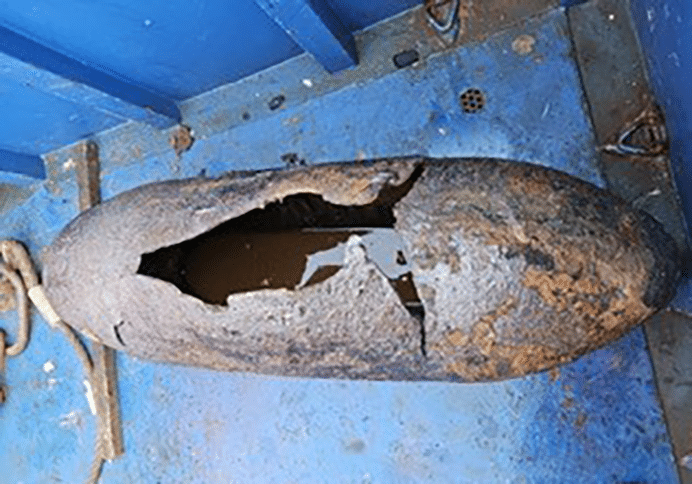
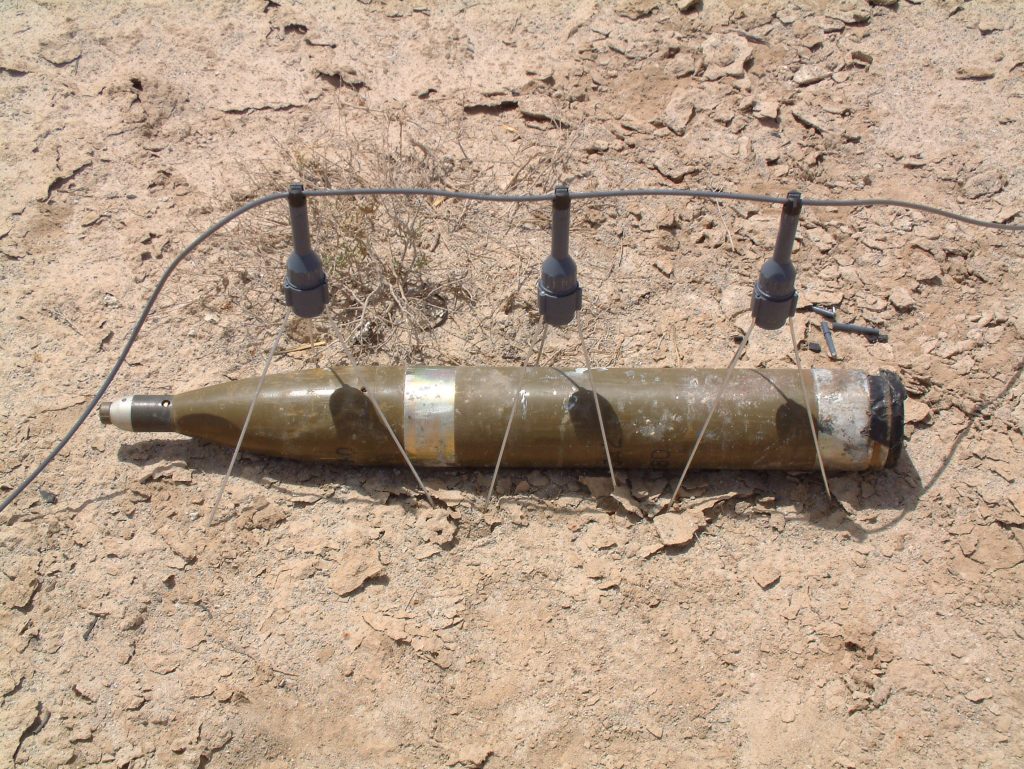
1000lb air-dropped bomb that has been low-ordered by Pluton shaped charge
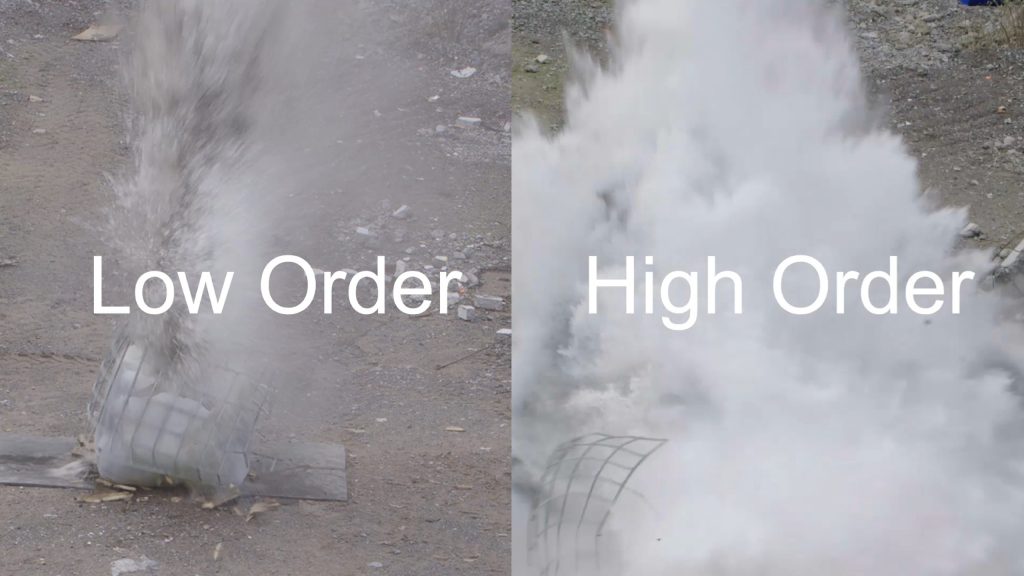
High-order detonation of UXO in the maritime environment introduces significant challenges, including shockwave propagation, risk to marine life, and regulatory restrictions.
Low-order deflagration provides a controlled alternative.
The Pluton system defeated each UXO by driving a subsonic burn of the main explosive fill rather than triggering a high-order detonation. This approach eliminates the primary shockwave and significantly reduces the event’s acoustic signature.
Across all 16 disposals, noise levels remained within the limits defined by the project’s monitoring systems, enabling continuous operations without environmental exceedances.
The Pluton System
Pluton is a shaped charge system that reliably and consistently achieves low-order disposal of legacy ordnance.
The system operates by:
- Penetrating the casing using a precision-shaped charge jet
- Delivering a controlled initiation stimulus to the explosive fill
- Driving a low-order deflagration rather than a detonation
This distinction is critical. Detonation produces a supersonic reaction with high overpressure and significant acoustic output. Deflagration is subsonic, rapidly consuming the explosive fill without generating the same shock effects.
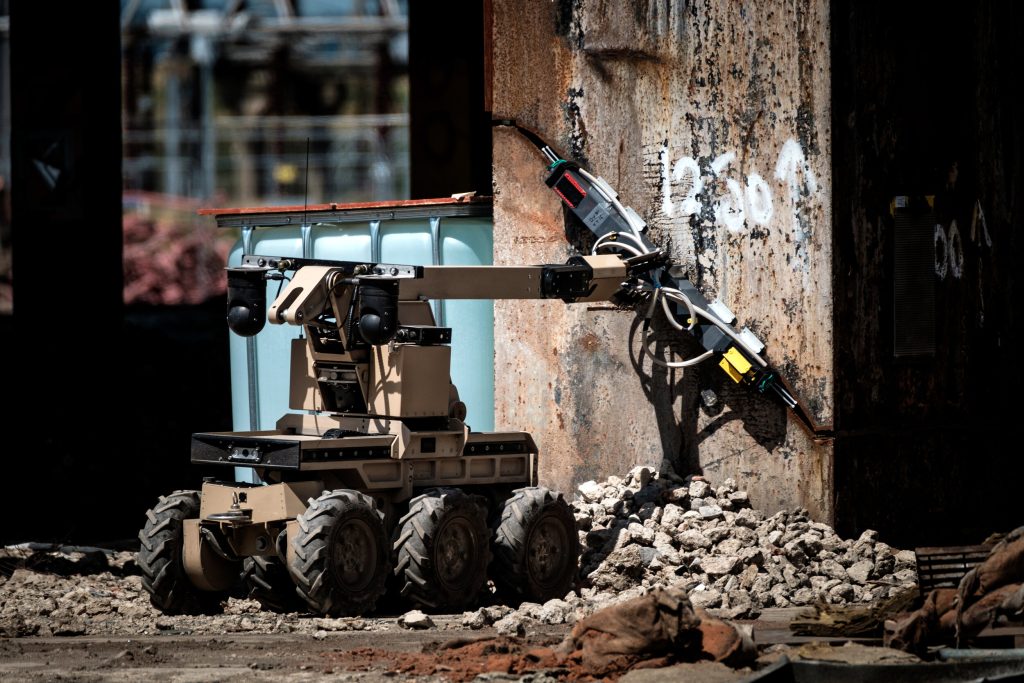
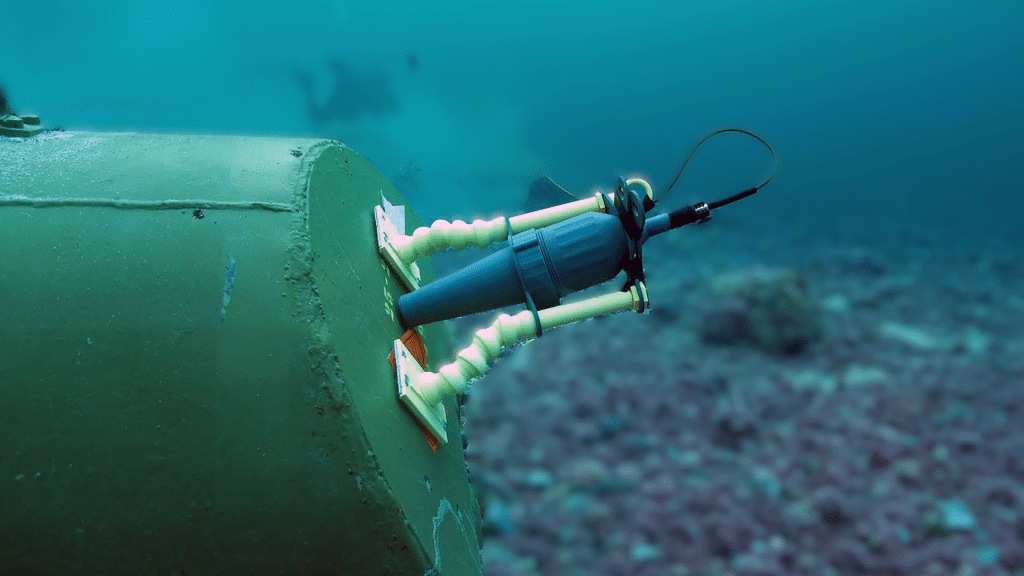
Pluton is fully compatible with ROV deployment, making it ideal for deep-water and restricted-access environments where diver operations are impractical. Pluton has proven its capabilities across a wide range of ordnance types, including large-calibre air-dropped bombs and ground mines.
UK regulatory frameworks recognise the system as a compliant low-noise disposal method, enabling operators to use it in environmentally sensitive areas and near critical offshore infrastructure.
The Operation
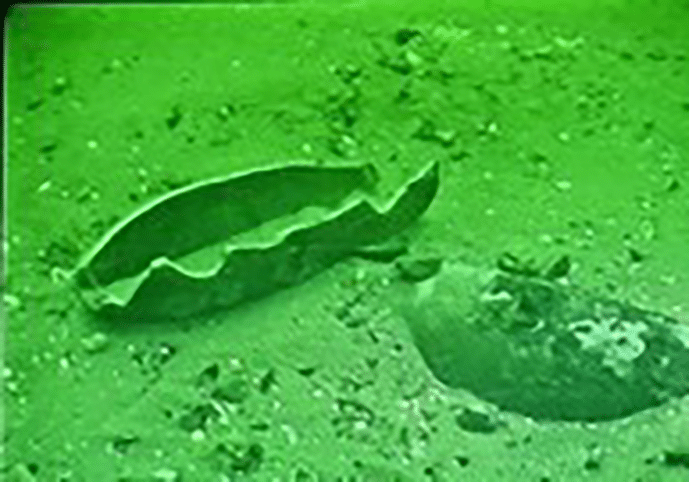
Air-dropped weapons on the seabed following a low-order result
Helix RS deployed a Triton work-class ROV (WROV) to locate, access, and neutralise each item.
The team neutralised all 16 UXO items on the first attempt and required no re-interventions.
Outcome
The UXO clearance programme was completed safely and efficiently, within all environmental constraints, allowing wind farm construction to proceed as planned.
For Helix RS, the operation demonstrated effective delivery under compressed timelines and challenging offshore conditions.
For Pluton, it represents another validated application of low-order disposal in a high-consequence, environmentally sensitive environment.
If you’re planning a project that requires low-noise UXO disposal, our team can support you with proven systems and operational expertise.
Read the original case study.