
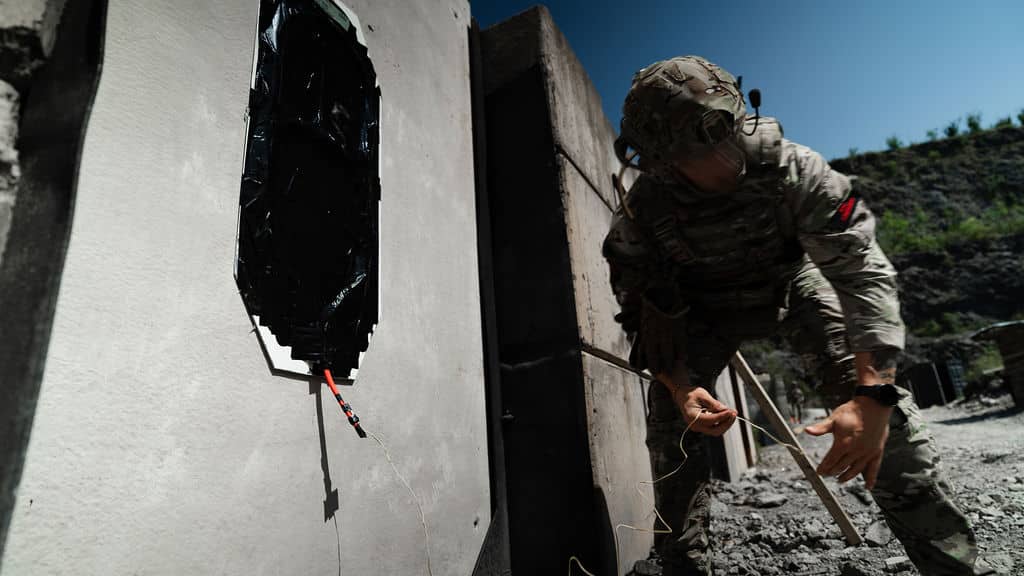
Breaching training develops the skills and judgement to gain entry through barriers and structures as part of tactical operations, selecting the right method for the target, the situation and the risk environment. Alford Training delivers breaching to military, security and law enforcement organisations across NATO and partner nations, led by a qualified Master Breacher.
Every programme is shaped by a Training Needs Analysis (TNA), so content, duration and entry standards reflect your unit’s existing competencies and operational requirements. Courses align with UK and NATO Standard Operating Procedures.
Full-Spectrum Methods of Entry

Our programmes cover the complete range of entry methods: explosive, hydraulic, manual, thermal, and ballistic.
Training addresses both Manual Methods of Entry (MoE) and Explosive Methods of Entry (EMoE), from foundational skills through to advanced team-level entry in tactical scenarios.
Course emphasis is agreed through the TNA: police entry teams, assault engineers and specialist military units each need a different balance across the five methods, and we build the programme accordingly.
Dedicated Breaching Facilities
Breaching training is delivered on a dedicated breaching area at Broadmead Range, featuring bespoke, durable and versatile rigs. Teams run realistic, repeatable MoE and EMoE tactical scenarios, consolidating skills under pressure rather than theorising in a classroom.
How Our Training Is Delivered
TNA-led design
Content, duration, cohort size and entry standards are tailored to your requirements through a comprehensive Training Needs Analysis, not fixed to a standard template.
Practical first
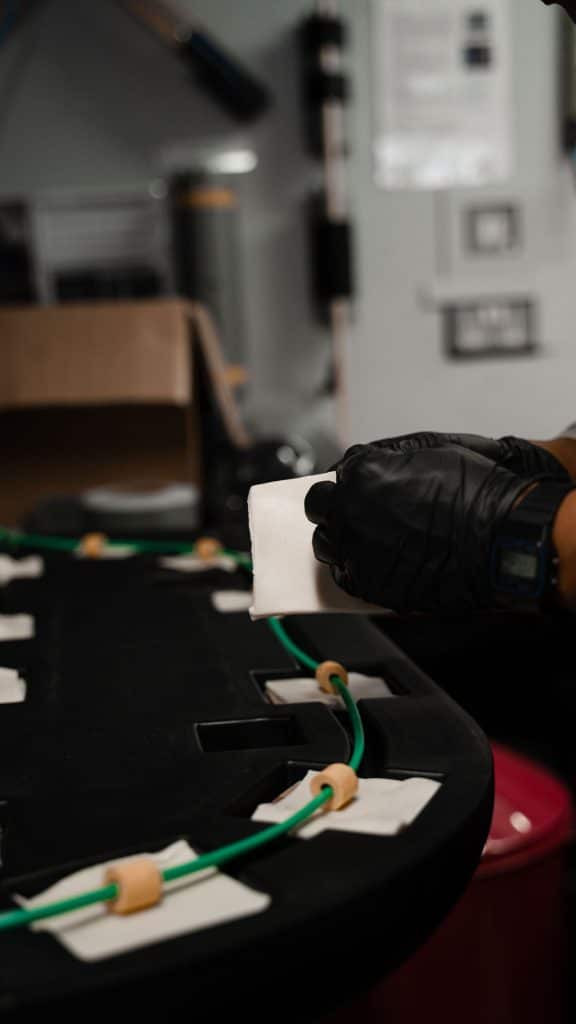
Classroom instruction is minimised in favour of realistic, instructor-led practical exercises on the breaching rigs and live-fire ranges.
Honest assessment
Training is delivered outside the students’ normal chain of command, creating an environment where weaknesses and training deficiencies can be identified and addressed before they become operational risks.
Reduced administrative burden
We take on the risk management and safety responsibilities for the range, freeing your unit to focus entirely on training quality rather than on planning and running a demolitions range.
Where we train
Primarily at Broadmead Range, with additional capacity at Emborough Range. Training teams can also deploy overseas to your location.
Your Instructors
Breaching training is led by Chief Instructor Steve Hayward, a Master Breacher-qualified former Royal Marine with over 22 years of service, including as Chief Instructor at the Assault Engineer School.
What Our Customers Say
Frequently Asked Questions
What methods of entry does the breaching training cover?
Alford breaching programmes cover explosive, hydraulic, manual, thermal and ballistic methods of entry, spanning both Manual Methods of Entry (MoE) and Explosive Methods of Entry (EMoE). The course emphasis is agreed upon through the Training Needs Analysis process.
What is Explosive Methods of Entry (EMoE)?
Explosive Methods of Entry (EMoE) is the use of explosive charges to gain entry through doors, walls and other barriers as part of tactical operations. It demands precise charge selection and placement judgement, developed through realistic, repeatable training. Alford’s EMoE training is led by a qualified Master Breacher on dedicated breaching facilities.
Who are these courses for?
Breaching courses are designed for military, security and law enforcement organisations across NATO and partner nations, from assault engineers and specialist military units to police firearms and entry teams. Entry standards are agreed through the TNA process.
Who leads the training?
Chief Instructor Steve Hayward, a qualified Master Breacher with over 22 years of Royal Marines service, formerly Chief Instructor at the Assault Engineer School.
Where is the training delivered?
Primarily at Alford’s dedicated breaching area at Broadmead Range in the UK, with additional capacity at Emborough Range. Training teams can also deploy overseas to the client’s location.