Tamping Explosive Charges: How It Works and Why It Matters
Author: Jon Hall
Published: 12th December 2024
First published 12 December 2024 · Updated 3 November 2026
Tamping means placing a mass of material against an explosive charge, on the side away from the target, so the expanding gases push into the target instead of escaping into the air. A well-tamped charge does the same job with less explosive. That, in turn, reduces overpressure, safety distance, and collateral damage.
Water is the tamper of choice in breaching and EOD. In quarrying, the same idea is called stemming and works rather differently. This guide explains the principle, why water works so well, how tamping is used across sectors, and its limits.
Key terms
- Tamping: placing material against a charge to direct more of its energy into the target. The material is the tamper.
- Stemming: inert material placed in a borehole after the charge to confine the explosion gases.
- Overpressure: the air blast pressure above normal atmospheric pressure. It is what operators and bystanders feel.
- Stand-off or safety distance: how far operators must be from a charge when it fires.
- NEQ: net explosive quantity, the mass of explosive in a charge.
How tamping works
An untamped charge on the surface of a target wastes much of its energy. The gases expand most easily into open air, so much of the energy goes into blast and noise rather than into the door, wall, or rock.
A tamper changes that. Its mass resists the expanding gases for a fraction of a second, long enough for more of the energy to couple into the target. The result is a bigger effect for the same charge, or the same effect from a smaller one. Tamping adds no energy; it simply wastes less.
Why water makes a good tamper
Sandbags, soil and clay all work as tampers. Water has particular advantages in breaching and EOD:
- No hard fragments. Improvised tampers can break up into debris. Water does not.
- Flash suppression. Water around the explosive suppresses the flash, reducing the risk of fire and injury.
- Lower overpressure. Because less explosive is needed, the blast reaching the operator is smaller.
- Easy to supply. Alford charges ship empty and inert, then get filled with explosive and water when needed.
Where water is impractical, a water-based gel or clay can do the same job. Alford Strip offers both.
Tamping across applications
| Application | Tamper | What it achieves | Alford examples |
|---|---|---|---|
| Door and window breaching | Water, water-based gel or clay | Less NEQ, lower overpressure, shorter stand-off, near-zero fragmentation | Breacher’s Boot, Alford Strip |
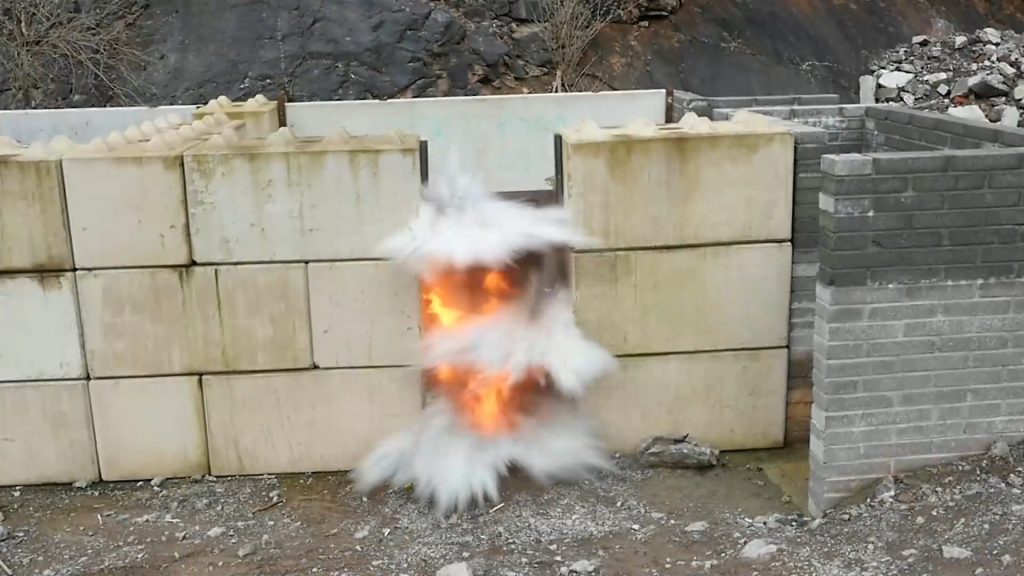
| Wall breaching | Water | Less explosive, at least half the usual safety distance, minimal forward fragmentation | Gatecrasher |
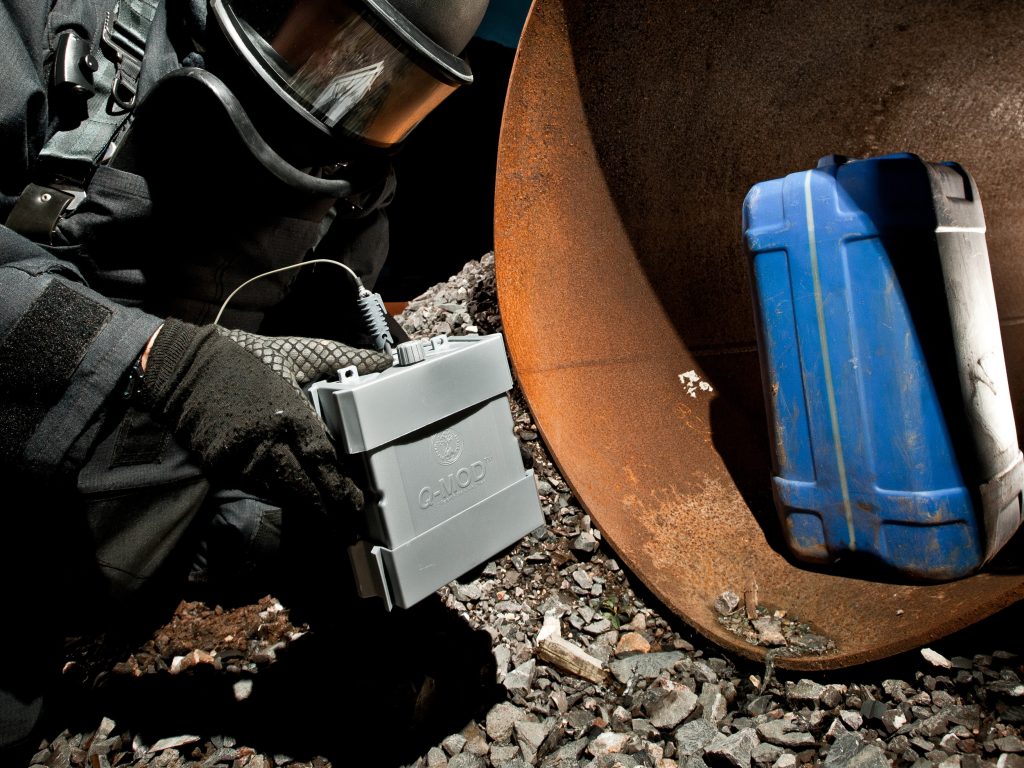
| IED disruption | Water as both tamper and projectile | Lower overpressure, flash suppression, low fragmentation | BootBanger, QMod |
| Quarry and mine blasting | Stemming, ideally dry crushed rock | Better fragmentation, less flyrock and airblast | Not an Alford product area |
Tamping in breaching
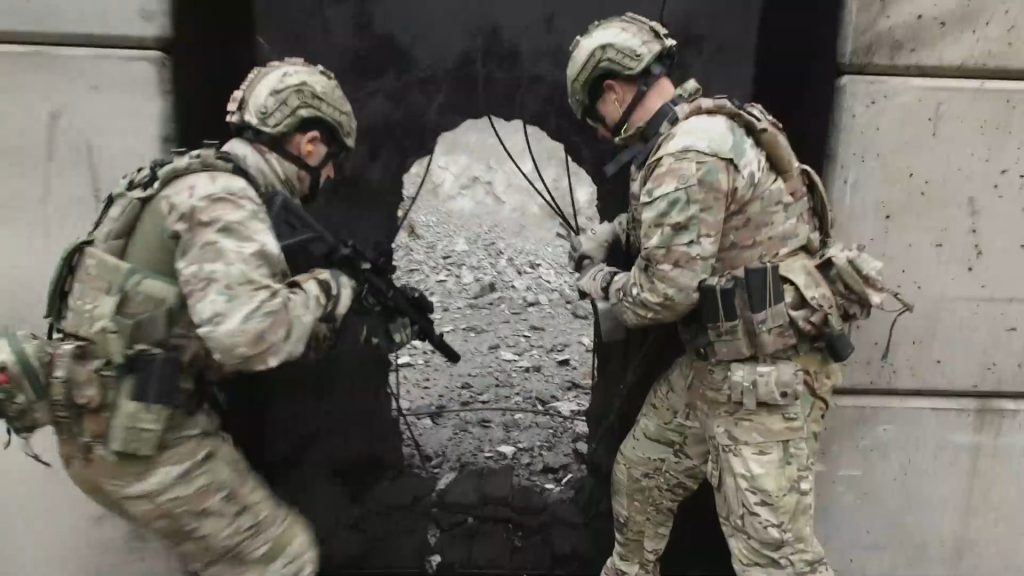
In explosive method of entry, every gram matters. Less explosive means less overpressure inside the building, a shorter stand-off for the entry team and less risk to anyone behind the door.
Alford’s breaching charges are built around water tamping:
- Alford Strip uses only a quarter to a third of the NEQ of an untamped charge for the same effect.
- Gatecrasher, the original water-tamped wall breaching charge, cuts the safety distance by at least half.
- Breacher’s Boot puts water behind the charge and a Water Cushion™ in front. That spreads the force across the door without cutting it, while reducing overpressure and stand-off. It is the only charge of its kind approved for use by British police forces.
Read more in our guide to Explosive Methods of Entry.
Tamping in IED disposal
In a water disruptor, water does two jobs. Behind the explosive, it tamps; in front, it becomes the projectile that breaks up the IED. On BootBanger, water tamping reduces overpressure and suppresses the flash, significantly lowering the chance of igniting a vehicle’s fuel tank.
For more, read How Water Disruptors Work and IED Disposal: History, Techniques and Technology.
Stemming in quarrying and mining
In blast holes, the equivalent of tamping is stemming: inert material placed in the borehole after the charge to confine the explosion gases. Good stemming improves fragmentation and reduces flyrock, noise and airblast.
The best material is not water. Dry, angular crushed rock locks into the hole walls and resists ejection. Water, mud and wet clay tend to flow out. Stemming has been mandatory in all South African mining operations since 2015.
The trade-offs
- Weight. Water is heavy. Improvised water tamping for a single door, using intravenous fluid bags, can add 3 to 6 kg.
- Flexibility. Once a tamped charge is built for a target, it is harder to adapt if the situation changes.
- Fragmentation from the wrong tamper. Rigid or improvised tamping materials can break up and become fragments.
- Training. Tamping changes how a charge behaves. Operators need to train with the actual charges they will use.
FAQ
What is tamping in explosives?
Placing a mass of material against a charge, on the side away from the target, so more of its energy goes into the target and less into the air.
What is the difference between tamping and stemming?
The terms overlap, but in breaching and EOD, tamping usually means material placed against a surface charge. In quarrying and mining, stemming is the material placed in a borehole on top of the charge.
Why is water used to tamp breaching charges?
Water tamps effectively without producing hard fragments, suppresses flash and allows a smaller explosive load, which reduces overpressure and stand-off.
Does tamping make an explosive more powerful?
No. It adds no energy. It wastes less of the explosive’s energy, so more reaches the target.
Breaching charges and training
Alford designs water-tamped breaching charges for military and law enforcement teams, and trains breachers at our UK ranges. See the breaching range, our Explosive Breaching & MoE course, or talk to our team.
Related: How Water Disruptors Work · IED Disposal: History, Techniques and Technology · Explosive Methods of Entry · Security and policing breaching